
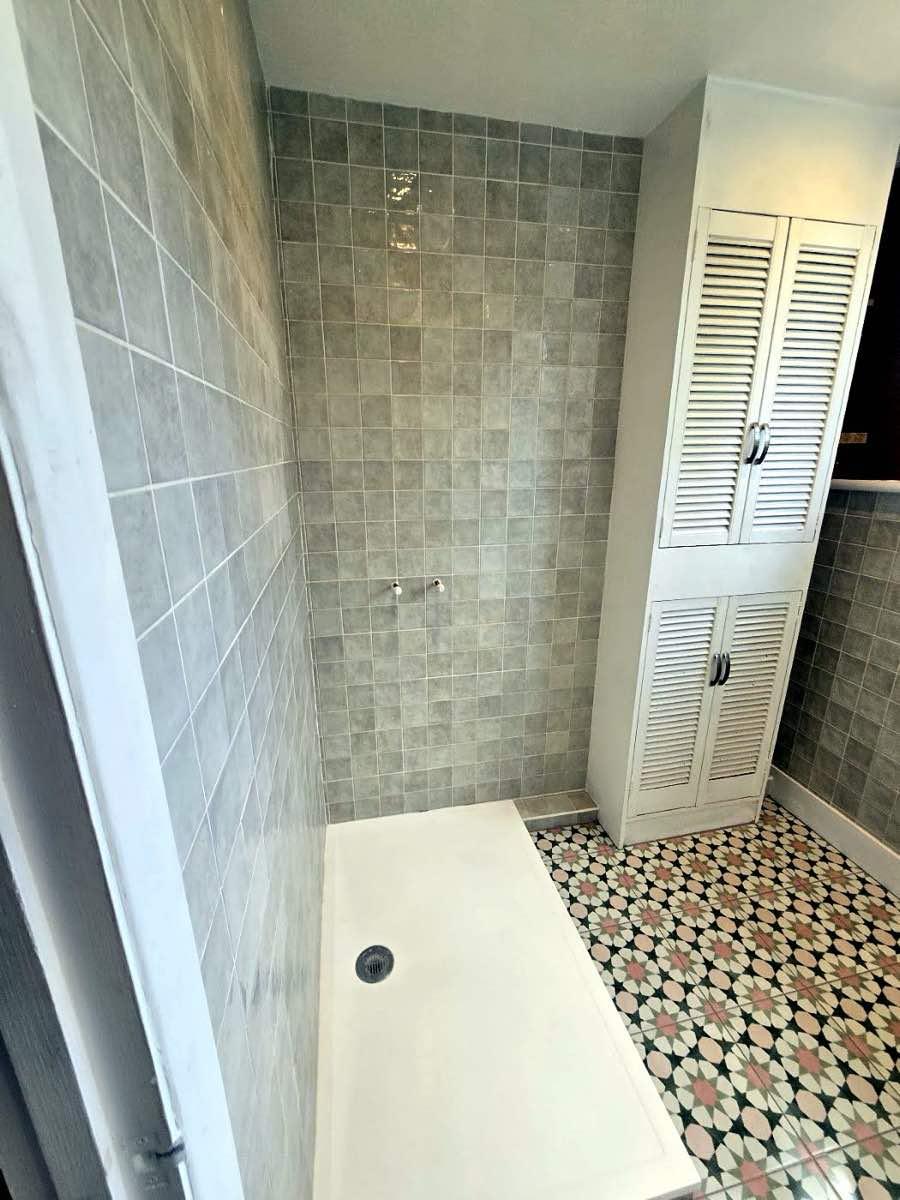
A shower can leak behind the tiles for months before anything shows. By the time there is a stain on the ceiling below, the wall or floor behind the tiles may have been wet for a long time.
Here are the signs to look for, what usually causes them, and what can be done about each one.
The warning signs
- A stain, bubbling paint or a damp patch on the ceiling under the bathroom.
- Tiles that sound hollow when tapped, or that move when pressed.
- Grout that stays dark long after the shower has been used, or is cracked or missing.
- Black mould behind or under the silicone rather than just on its surface.
- Silicone that has pulled away from the tray, bath or wall, leaving a gap.
- A musty smell that does not clear with ventilation.
- Skirting, flooring or a door frame outside the shower that is swelling or staining.
- Tiles that have cracked in a line, which can mean the board behind them has moved or softened.
Any one of these is worth investigating. Several together usually means water has been getting in for a while.
Why showers leak behind tiles
Tiles and grout are not waterproof on their own. Grout is porous, and water soaks through it into whatever is behind. In a well built shower, that water meets a tanking membrane or a waterproof board and goes nowhere. In many older bathrooms, there is no waterproofing at all, just tiles on plaster or plasterboard.
Common causes are:
- No tanking behind the tiles in the shower area.
- Failed silicone where the tray or bath meets the wall, which is the most common leak point.
- A shower tray that was not bedded properly and flexes, breaking the seal.
- Leaks from the shower valve, pipework or waste, which look like tile leaks but are plumbing.
- Cracked or missing grout letting more water through than the wall can cope with.
When regrouting and resealing is enough
If the tiles are all firmly stuck, the wall behind feels solid, and the only problems are tired grout and old silicone, raking out and regrouting the joints and replacing the silicone can be enough. The new silicone should go onto clean, dry surfaces, and on a bath, it helps to fill the bath with water first so it sits at its lowest point while the silicone cures.
This is a short-term fix if there is no waterproofing behind the tiles. It reduces how much water gets through, but it does not stop it.
When the area needs stripping back
If tiles are hollow or loose, the wall is soft, there is mould behind the silicone, or there is damage below, the tiles need to come off. Behind them you will often find wet or crumbling plaster, swollen plasterboard or rotten timber around the tray.
The fix is to strip back to a sound surface, let it dry, replace any damaged board with a tile backer board, and tank the shower area with a proper waterproofing system before retiling. Tiling over the top of a leaking shower just hides the problem. Can you tile over tile explains why this is one place where going over the old tiles is the wrong call.
Rule out the plumbing first
Before blaming the tiles, it is worth checking the plumbing. A plumber can test the valve, the pipes and the waste. If the ceiling only gets wet when the shower is running, it is often the waste or the tray seal. If it gets wet even when the shower is off, a supply pipe is more likely.
A simple test is to run water only onto the tray, not the walls, and see whether the leak appears. Then try the walls, avoiding the tray. That helps narrow it down.
Preventing it next time
When a shower is retiled, the wet area should be tanked as standard, with the tray bedded firmly and sealed into the system. A wet room needs the whole floor tanked and laid to a fall. What is a wet room explains how that is done.
After that, good habits help: squeegee the walls, keep the room ventilated, and replace silicone when it starts to discolour or lift.
If you are seeing any of these signs, I can come and look at the shower and tell you honestly whether it needs regrouting or stripping back. I cover Chelmsford, Great Baddow, Springfield and nearby villages. See bathroom and wet room tiling, preparation and waterproofing and wall tiling, then get in touch or call 07792 959839.
Published by Aarron, Ceramic And Marble Tiling