
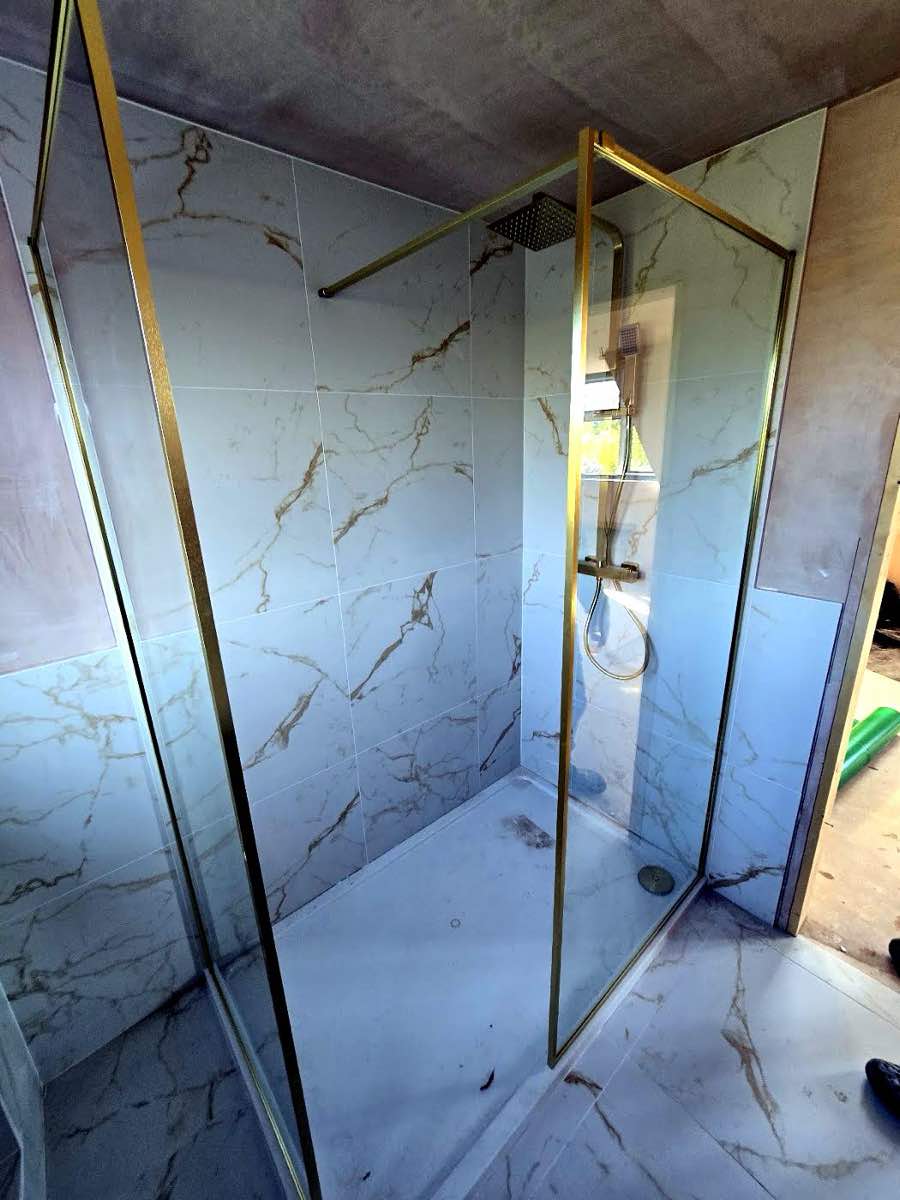
Yes, you can tile over tile, but only if the old tiles are sound, flat, well bonded and dry, and the extra weight and height will not cause problems. If any of those are in doubt, taking the old tiles off is the better job.
Tiling over tile saves the mess and time of stripping a room, so it is a fair question. The trouble is that the new tiles can only ever be as good as what they are stuck to. Here is how to tell whether your old tiles are a safe base, and what has to happen before anything goes on top.
When tiling over tile can work
Tiling over tile is most likely to work on a dry wall or floor where the existing tiles were put up properly in the first place. Before you go any further, the old tiling should pass all of these checks:
- Every tile is firmly stuck. Tap each one with the handle of a screwdriver. A dull, hollow sound means there is a void behind it.
- No cracked, chipped or loose tiles, and no grout that is crumbling or missing.
- The surface is flat. Run a long straight edge over it. Any bow or dip will show through the new tiles, and more so with large format.
- There is no sign of damp, mould behind the grout, or water getting in.
- Only one layer of tile is there already. Going over two layers is asking a lot of the wall or floor underneath.
A splashback in a kitchen, or a dry wall in a utility room, is the sort of place where this can be a sensible shortcut.
When you should not tile over tile
If the old tiles fail any of the checks above, they need to come off. There are also a few situations where it is usually the wrong call even if the tiles look fine.
- Showers and wet areas. You cannot see whether there is any waterproofing behind old tiles, and in older bathrooms there often is not. Tiling over the top seals the problem in.
- Floors where height matters. A new tile plus adhesive adds noticeable height. Doors may need trimming, thresholds may no longer line up, and appliances that slide under a worktop may not fit.
- Walls with a weight limit. Plaster and plasterboard can only carry so much. Adhesive makers usually quote around 20kg per square metre on gypsum plaster and around 32kg on plasterboard that has not been skimmed, with the adhesive and grout counted in. Two layers of tile can get close to that, and heavy stone or porcelain can go over it.
- Floors that move. Old tiles on a timber floor that flexes will pass that movement straight into the new tiles. The floor needs sorting first.
How to prepare old tiles for new tiles
Glazed tiles are smooth and non-porous, so ordinary adhesive struggles to grip them. If the old tiles are sound, the preparation goes roughly like this:
- Replace or re-fix any loose or hollow tiles, and fill any gaps so the surface is flat.
- Clean and degrease thoroughly. Kitchens and bathrooms collect grease, soap and limescale, and adhesive will not bond to any of it.
- Key the glaze if the primer or adhesive maker asks for it, so there is something to hold on to.
- Apply a primer made for non-porous surfaces and let it dry as the manufacturer says.
- Use a flexible, cement-based adhesive suitable for tiling over existing tiles, with full coverage on the back of each new tile.
Every product will have its own instructions, and they matter. Skipping the primer or using the wrong adhesive is the usual reason tiles laid over tiles let go.
The risks of tiling over tile
Even when it is done well, you are building on something you cannot fully inspect. If the original tiles were stuck on with dabs of adhesive, or the plaster behind them is weak, the new layer can bring the whole lot off the wall later. On a floor, a hollow tile underneath becomes a cracked tile on top.
There are also finishing problems. Extra thickness changes how tiles meet window sills, bath edges, shower trays, sockets and switches. Sockets may need moving forward, trims get deeper and silicone joints get wider. These are the details you look at every day.
Why tilers usually strip bathrooms back
In a bathroom, most professional tilers will recommend taking the old tiles off. It is not about making the job bigger. Stripping back lets you see the wall, check for damp, board or level where it is needed, and tank the wet areas properly before tiling.
That is how I work on bathrooms. Wet areas around the shower and bath are tanked as standard, because grout and silicone are not waterproof on their own and water will find its way behind tile. You can read more about that stage on my preparation and waterproofing page.
On a dry wall or floor that passes the checks, tiling over can be fine. I will tell you honestly which one applies when I come and look at it.
If you are planning new tiles and are not sure whether the old ones can stay, I can come and check them and give you a free quote. See wall tiling, floor tiling and bathroom and wet room tiling, or have a look at the work I do in Chelmsford and Great Baddow.
Published by Ceramic And Marble Tiling LTD