
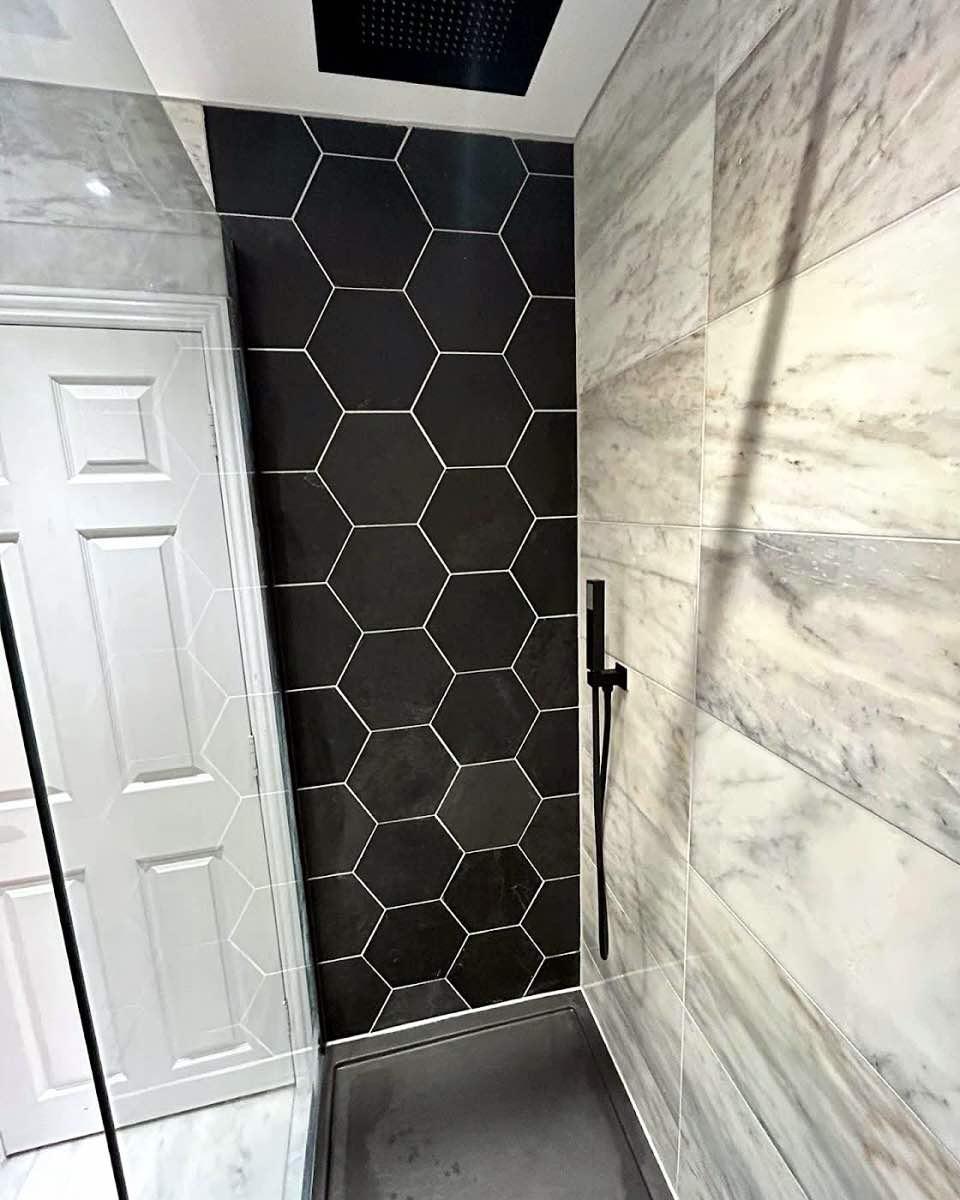
Marble and natural stone tiles look wonderful, and each one is different. They also need a little more looking after than porcelain, because stone is porous and many types react badly to the wrong cleaning products.
None of it is complicated. Here is what keeps stone looking good for years, and the few things that do real damage.
Why stone needs sealing
Most natural stone absorbs liquid. Unsealed, it can soak up oil, coffee, wine, shampoo and even the colour from a rug. A penetrating sealer soaks into the stone and slows that absorption down, giving you time to wipe a spill before it stains.
On a job, stone is usually sealed before grouting, so grout cannot stain the face, and again after grouting. Sealer does not make stone stain-proof or scratch-proof. It buys you time.
Everyday cleaning
- Sweep or vacuum floors regularly. Grit underfoot acts like sandpaper on polished stone.
- Mop with warm water and a cleaner sold as suitable for natural stone, usually described as pH neutral.
- Wipe spills quickly, especially anything acidic, oily or coloured.
- Use soft cloths and mops, not scouring pads.
- In a shower, a quick squeegee after use keeps water marks and soap build-up down.
What to avoid
Marble, limestone and travertine are calcium-based stones, and acids react with them. The result is etching, a dull, slightly rough mark where the polish has been eaten away. Sealer does not stop it, because the acid attacks the stone itself.
- Vinegar, lemon and other acidic home remedies.
- Most limescale removers and bathroom descalers.
- General bathroom cleaners that are not labelled safe for stone.
- Bleach and strong alkaline cleaners used regularly, which can wear the sealer and the finish.
This is the most common way stone gets damaged, and it is usually done with the best of intentions.
Limescale in a hard water area
Chelmsford and much of Essex has hard water, so limescale builds up on shower walls, glass and taps. On porcelain you can use a descaler. On marble and limestone you cannot, at least not the usual acidic kind.
The answer is prevention. Squeegee or wipe the stone after showering, so water does not dry on it. Use a stone-safe cleaner regularly, so build-up never gets thick. If marks do form, there are stone-specific products for them, and testing anything new on a hidden tile first is always worthwhile.
If you are choosing tiles for a shower in a hard water area and do not want that routine, it is worth looking at porcelain with a stone effect instead. Porcelain or ceramic tiles covers the differences.
How often to reseal
It depends on the stone, the sealer and how much use the area gets. A shower floor or a kitchen floor needs it more often than a bathroom wall. A simple test is to put a few drops of water on the stone. If it darkens quickly, the sealer has worn and it is time to reseal. Follow the sealer manufacturer's guidance.
Stone in wet rooms and showers
Stone works in showers, but choose the finish carefully. Polished marble is slippery when wet, so honed or textured finishes are better for floors. Some stones are also more prone to staining or marking from water than others. What is a wet room covers slip resistance on wet floors.
Fitting matters too
Many of the problems blamed on stone come from how it was fitted. Pale marble needs white adhesive, because grey can show through. Stone needs a stiff, flat base and full adhesive coverage. Tiles should be dry-laid and sorted first so the colour and veining are spread evenly. I cover all of this on my marble and natural stone page.
I fit marble, travertine and other natural stone across Chelmsford, Writtle and Danbury. See marble and natural stone tiling, bathroom tiling and floor tiling, then get in touch or call 07792 959839 for a free quote.
Published by Aarron, Ceramic And Marble Tiling