
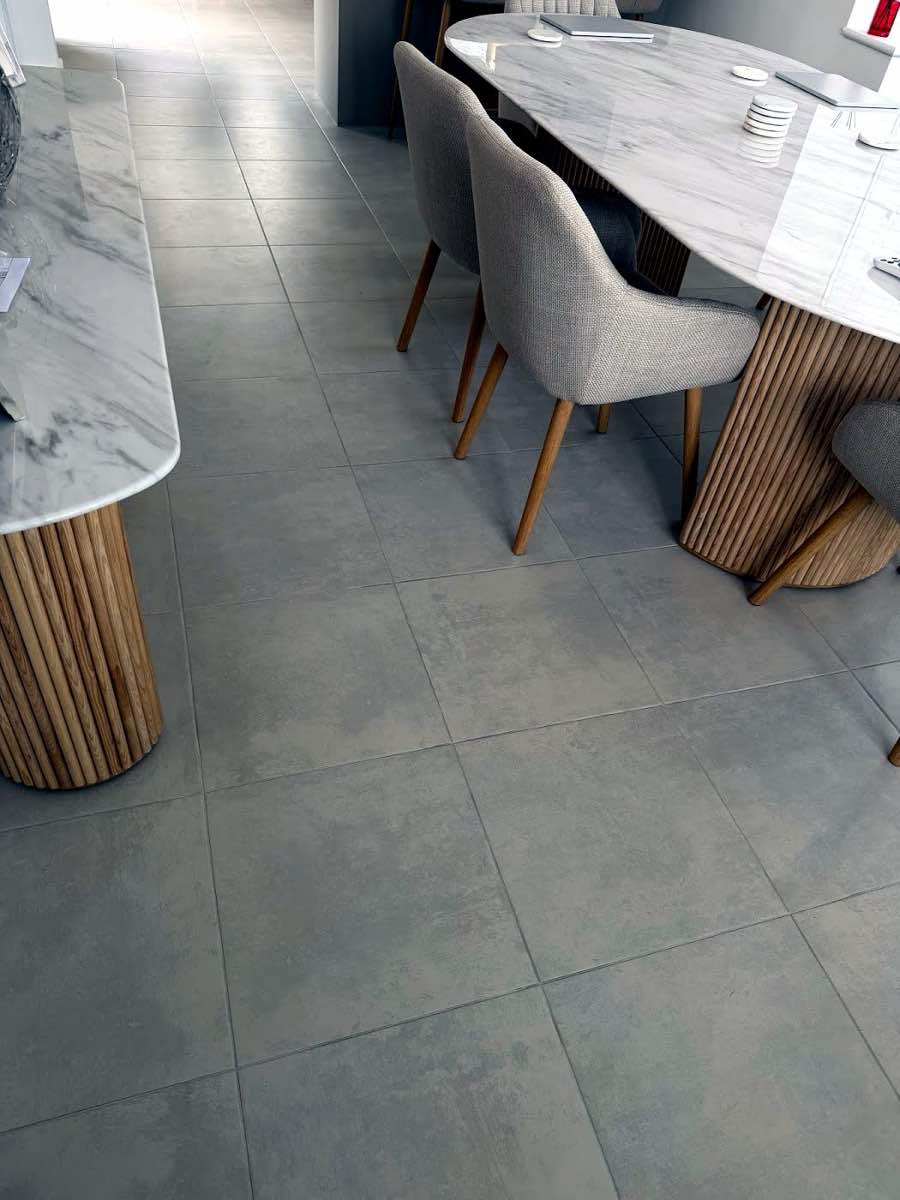
Porcelain and ceramic tiles are both made from clay and fired in a kiln, and in a showroom they can look almost identical. The difference is in how dense they are, and that changes where each one belongs in your house.
Here is what actually separates them, where each one makes sense, and what the choice means for the job itself.
The main difference: water absorption
Porcelain is made from finer clay and fired at a higher temperature, so it ends up denser and less porous. Tiles are classified under the European standard BS EN 14411 by how much water they absorb. Porcelain sits in the lowest group, absorbing 0.5% or less of its weight in water. Most wall ceramics absorb a good deal more, typically over 3%.
That one number explains most of the practical differences. A dense tile is harder wearing, more resistant to staining and better able to cope with frost. A more porous tile is lighter, easier to cut and perfectly good in the right place.
Where porcelain makes sense
- Floors that get heavy use, such as kitchens, hallways and open-plan living areas.
- Shower floors and wet rooms, where water sits on the surface and the tile needs to cope with it.
- Anywhere outside or unheated, because a tile that absorbs water can crack when that water freezes.
- Large format tiles. Almost all big tiles, 60 by 60 cm and above, are porcelain because a large tile needs the strength.
Through-body and colour-body porcelain also hide chips better, because the colour runs through the tile rather than sitting only on the glaze.
Where ceramic is a good choice
Ceramic is not the poor relation. On walls it is often the better option. It is lighter, which matters on plasterboard, and it comes in a huge range of glazes, colours and handmade-look finishes that porcelain does not always match. Metro tiles and glossy splashback tiles are very often ceramic.
- Bathroom walls outside the direct shower area, and splashbacks in kitchens.
- Feature walls where you want a particular glaze or colour.
- Walls where weight is a concern and a lighter tile keeps you well inside the limit.
What ceramic is not suited to is busy floors or outside use, unless the manufacturer specifically rates it for that.
What the choice means for fitting
Porcelain is harder to cut and drill. It needs good diamond blades and bits, and holes for pipes and sockets take longer. That is part of why tiling in porcelain can take longer than ceramic of the same size.
Porcelain also absorbs so little that it does not suck adhesive in the way a porous tile does. It needs a flexible, cement-based adhesive rated for porcelain, with full coverage on the back of each tile, not dabs. On floors with underfloor heating or a timber base, a flexible adhesive matters even more.
Weight is the other consideration. Porcelain is heavier, and plaster and plasterboard walls have limits on what they can carry, including the adhesive and grout. With heavy porcelain on a wall, I check the wall first and board it if needed. You can read more about those limits in can you tile over tile, where the same rule applies.
Glazed, polished and matt finishes
Both types can be glazed. Polished porcelain looks smart, but it can be slippery when wet, so it is better on walls or dry floors than in a bathroom. For a bathroom or kitchen floor, look at the slip rating on the box rather than judging by feel.
Matt and textured finishes hide water marks better, which helps in a hard water area like Chelmsford, where limescale shows quickly on glossy dark tiles.
A simple rule of thumb
If it is going on a floor, in a shower, or outside, choose porcelain. If it is going on a wall and you love a particular ceramic, it will almost certainly be fine. When I come out to measure up, I'll look at where the tile is going and tell you honestly whether the one you have in mind will work.
I fit both porcelain and ceramic across Chelmsford, Springfield and the surrounding villages. See floor tiling, wall tiling and kitchen tiling and splashbacks, or read what is a wet room if you are planning a shower floor. For a free quote, get in touch or call 07792 959839.
Published by Aarron, Ceramic And Marble Tiling